
Question: How does alcohol/weed affect blood...
Lows can come at you out of nowhere! But being prepared and a little bit of prevention can help keep them from derailing your whole day.
Low Prevention:
Lows can’t always be predicted but let’s talk through some strategies to help keep the beeps away.
If you’re wearing CGM, make sure you personalize those low alerts. Do you have different criteria for treating during the day vs at night? Do your CGM alert settings reflect that? Did you know that pumps and CGMs can give predicted low alerts now? It’s like a nice little heads up, “hey you aren’t low yet, but it might be snack time bestie.”
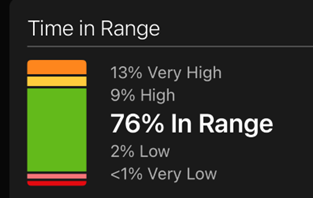
Review your CGM/Time in Range reports. When you’re looking at CGM reports and Time in Range (TIR) to assess hypoglycemia, low is defined as 55-69mg/dL and very low as <55mg/dL. The goal is less than 5% time in low/very low combined and less than 1% total in very low. The photo below shows an example of a Dexcom TIR report.
If you’re seeing patterns of lows, it might be time for some dose adjustments. Send a message over to your endo team and let them know what you’re seeing. Patterns of lows mean that the low blood sugars are happening at the same time, every day, for multiple days in a row. If you use a Dexcom CGM, you can set up notifications through Dexcom Clarity to send you reports on any patterns that it may notice!
Lows and Activity
When you move your body, it can make insulin work better. Which also means that movement can lead to lows. Start your activity by knowing where your number is and determining if you may need a snack to start. Often pumps will also have a way to indicate that you are exercising. This can set your target blood sugar to a higher number in the algorithm to accommodate for activity. Always make sure to take your low snacks with you too!
Managing Lows without a CGM
The main trick to low management without a CGM is still information, but getting that information strategically so you aren’t testing a billion times a day. If you’re about to do an activity that is higher risk (think driving, exercising, taking an exam) where you’re more likely to experience BG fluctuations, that’s the time to know your starting number. Listen to your body and your symptoms!
Preparedness Action Items:
- Keep low treatments in all the places so you don’t have to travel to snacks
- Backpack/purse
- Bedside table
- Car
- Gym Bag
- Desk drawer at work
- Have a routine for checking when you need to replace low snacks (check every Sunday before hitting the store and buy/refill as needed)
- Know where your glucagon is and how to use it. Glucagon should travel with you too
- Make sure your glucagon is not expired
- Make sure the people who you spend the most time with (friends, roomies etc) know how and when to use glucagon
- Have multiple types of low treatments on hand in case you get the ick for fruit snacks all the sudden
- Never drive when you’re low
With diabetes, lows are bound to happen. If we’re ready for them, they can be less of a bummer and we can get back to life faster.
This resource is supported by Xeris Pharmaceuticals, Vertex Pharmaceuticals, and Dexcom. The Diabetes Link maintains editorial control over content.